
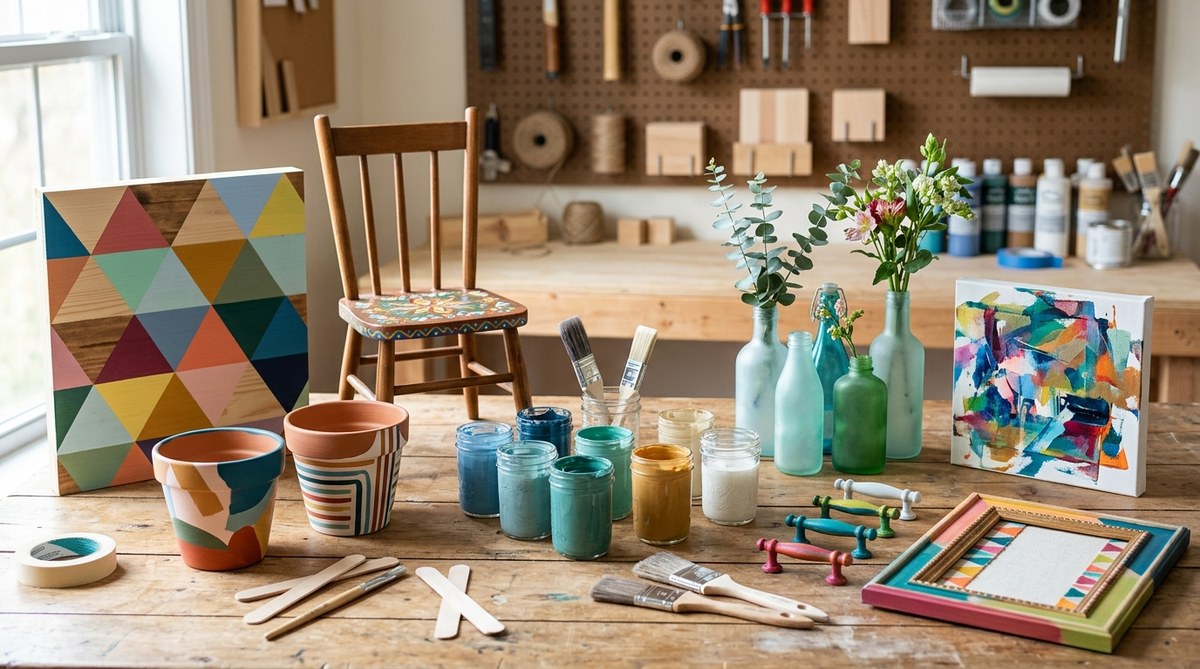
You finished painting the living room. The trim looks crisp. The walls are perfect. But now you are staring at a half-full can of paint. You do not want to throw it away. And you do not want to store it in the garage for years. The good news is that leftover paint can become your favorite DIY material. With a little creativity, you can transform that extra paint into projects that add personality to your home.
Leftover paint does not have to sit unused. You can create custom furniture finishes, color-coded storage systems, unique wall art, and outdoor decor. These projects are budget-friendly and reduce waste. With a few simple tools and some imagination, you can turn leftover paint into functional and beautiful additions to your home.
Why Saving Leftover Paint Makes Sense
Paint is expensive. Even a small can costs money. When you have leftover paint from a project, you already paid for it. Letting it dry out or throwing it away feels wasteful. But the real value comes from the possibilities.
Think about it. That quart of bold blue paint could become a new desk top. That warm gray leftover from the bedroom could refresh a tired bookshelf. You are not just saving paint. You are saving money on new materials.
Many DIY homeowners keep paint for touch-ups. That is smart. But after a year or two, the paint may not match perfectly. The sheen changes. The color shifts. Using it for a new project instead of a touch-up makes more sense.
Creative Uses for Leftover Paint That Go Beyond Touch-Ups
Here are seven ways to put that extra paint to work. Each idea is practical. Each one can be finished in a weekend.
1. Give Old Furniture a Fresh Coat
Your nightstand looks dated. The dresser from college has scratches. Instead of buying new furniture, use your leftover paint.
Start with a piece of wood furniture. Sand it lightly with 120-grit sandpaper. Wipe away the dust. Apply a primer if you are going from dark to light. Then paint two thin coats. Let each coat dry fully.
This works best for:
– Nightstands
– Desk chairs
– Bookshelves
– End tables
You can also try this technique on a plain dresser to turn it into a stylish buffet table. The same paint can unify mismatched furniture in a room.
2. Create a Color-Coded Storage System
Your garage is a mess. Your kids’ toys are everywhere. Use leftover paint to organize.
Paint the inside of drawers in different colors. Use one color for socks, another for shirts. Paint the rims of storage bins so you know what is inside without opening them. Paint the handles of garden tools in bright colors so they are easy to spot.
A simple approach:
– Choose a color for each category
– Paint a stripe on the container
– Label the stripe with a permanent marker
This system works for home offices, craft rooms, and garages. You can also use this idea when you build a pegboard wall organizer in one hour. The painted pegboard becomes a visual guide for tool storage.
3. Make Custom Wall Art
You do not need to be an artist to make beautiful wall art. Leftover paint is perfect for abstract pieces.
Take a canvas from a craft store. Apply painter’s tape in geometric patterns. Paint over the tape. Let it dry. Remove the tape. You have a modern geometric painting.
You can also try:
– Dip a string in paint and drag it across the canvas
– Use a sponge to create texture
– Pour paint in layers and tilt the canvas
This is a great way to use small amounts of paint. Even a few tablespoons are enough. For more inspiration, check out these simple DIY wall art ideas.
4. Refresh Plant Pots and Garden Decor
Your porch plants deserve better pots. Leftover paint can fix that.
Clean the pots with soap and water. Let them dry. Paint the outside with two coats. Use a clear sealer if the pot will stay outside in the rain.
You can paint:
– Terracotta pots
– Plastic nursery pots
– Wooden planters
– Garden stakes
Match the pot color to your front door or your deck furniture. This creates a cohesive outdoor look. You can even use the same paint to build a modern plant stand.
5. Update Cabinet Hardware and Drawer Pulls
Small hardware makes a big difference. Old brass knobs can look dated. But you do not need to replace them.
Remove the knobs from the drawer. Clean them with rubbing alcohol. Spray or paint them with your leftover paint. Use a high-quality brush for smooth results. Let them dry for 24 hours. Reattach them.
The result is custom hardware that matches your room perfectly. This trick works for:
– Kitchen cabinet pulls
– Dresser knobs
– Bathroom vanity handles
– Closet hooks
6. Build a Painted Accent Wall with Leftover Paint
You may not have enough paint for a full room. But you probably have enough for one wall.
Measure the wall. Calculate the square footage. A gallon of paint covers about 350 square feet. A quart covers about 100 square feet. If you have a quart, you can paint a small accent wall or a large section behind a sofa.
Choose the wall that gets the most attention. The wall behind your bed. The wall behind the dining table. The wall in the entryway.
This is a low-risk way to try a bold color. If you love it, you can buy more paint for the whole room later. If you are unsure, start with a stunning accent wall using reclaimed wood for texture and color.
7. Paint Picture Frames and Mirrors
A plain frame is boring. A painted frame is personal.
Take an old frame from a thrift store. Sand it lightly. Apply a primer if needed. Paint it with your leftover paint. Use a small brush for detailed areas.
You can paint:
– Wood frames
– Metal frames
– Plastic frames
– Unfinished frames
Group several painted frames together on a wall. Use the same color for consistency. Or use different shades from different leftover cans for a rainbow effect. This pairs well with a DIY photo display wall using string lights.
Common Mistakes to Avoid When Using Leftover Paint
Even simple projects can go wrong. Here is a table of common mistakes and how to avoid them.
| Mistake | Why It Happens | How to Fix It |
|---|---|---|
| Using old, separated paint | Paint settles over time | Stir thoroughly. Strain through cheesecloth. |
| Skipping the primer | Paint does not stick to slick surfaces | Use a bonding primer on plastic, metal, or laminate. |
| Painting in cold or humid conditions | Paint dries unevenly | Work when the temperature is between 50 and 85 degrees. |
| Applying thick coats | Paint drips and takes too long to dry | Use thin coats. Wait 2 hours between coats. |
| Forgetting to seal outdoor items | Paint peels in rain | Apply a clear polyurethane sealer. |
How to Prepare Leftover Paint for a New Project
Before you start, check your paint. Open the can. Stir it with a paint stick. Look for lumps or a bad smell. If the paint smells like rotten eggs, it has gone bad. Throw it away.
If the paint is thick, add a little water (for latex paint) or mineral spirits (for oil-based paint). Add one tablespoon at a time. Stir well. Test the consistency on a piece of cardboard.
Strain the paint if you see bits of dried paint. Use a paint strainer or old pantyhose. Pour the paint through the strainer into a clean container.
Tools You Need for Leftover Paint Projects
You do not need a lot of gear. But having the right tools makes the job easier.
- Small foam brushes for detail work
- A paint tray or disposable plate
- Painter’s tape for clean lines
- Sandpaper (120 and 220 grit)
- A drop cloth or newspaper
- A clear sealer for outdoor projects
If you are starting new projects, consider these essential tools for successful DIY home projects. They will help you work faster and get better results.
A Quick Reference for Paint Quantities
| Project | Paint Needed |
|---|---|
| One picture frame | 2 to 4 ounces |
| Small plant pot | 4 to 6 ounces |
| Nightstand | 8 to 16 ounces |
| Accent wall (8×10 feet) | 1 quart |
| Full dresser | 1 quart to 1 gallon |
Storing Leftover Paint Properly
If you still have paint after these projects, store it the right way. Tap the lid on tightly. Store the can upside down for a few seconds. This creates a seal. Keep the paint in a cool, dry place. Basements and garages work if they do not freeze.
Write the date and room name on the can with a marker. This helps you remember what color goes where.
When to Throw Paint Away
Not all leftover paint is worth saving. If the paint is chunky, smelly, or more than 10 years old, get rid of it. Check with your local waste management. Many areas have paint recycling programs.
Latex paint can dry out in the can. Add kitty litter or paint hardener. Let it dry completely. Then throw the can in the trash. Oil-based paint is hazardous waste. Take it to a drop-off center.
Turning Leftover Paint into a Family Project
Paint projects are fun for kids too. Let them paint their own picture frames or small wooden boxes. Use non-toxic paint if children are involved. This is a great way to teach them about reusing materials.
You can also paint a chalkboard surface on a wall or board. Mix a small amount of unsanded grout into your leftover paint. Stir well. Paint it onto a smooth surface. Once dry, you have a custom chalkboard.
Final Thoughts on Using Every Drop
That half-full can of paint does not have to sit in the corner of your garage. It can become a colorful bookshelf, a set of matching planters, or a piece of art for your wall. The best part is that you are not spending extra money. You are using what you already have.
Start small. Pick one project from this list. Gather your tools. Open that can of paint. You might surprise yourself with what you can create. And the next time you finish a painting project, you will look at the leftovers with excitement instead of annoyance.
If you want more ideas for your home, check out these budget-friendly DIY projects to upgrade your home this season. They pair perfectly with your new paint skills.