
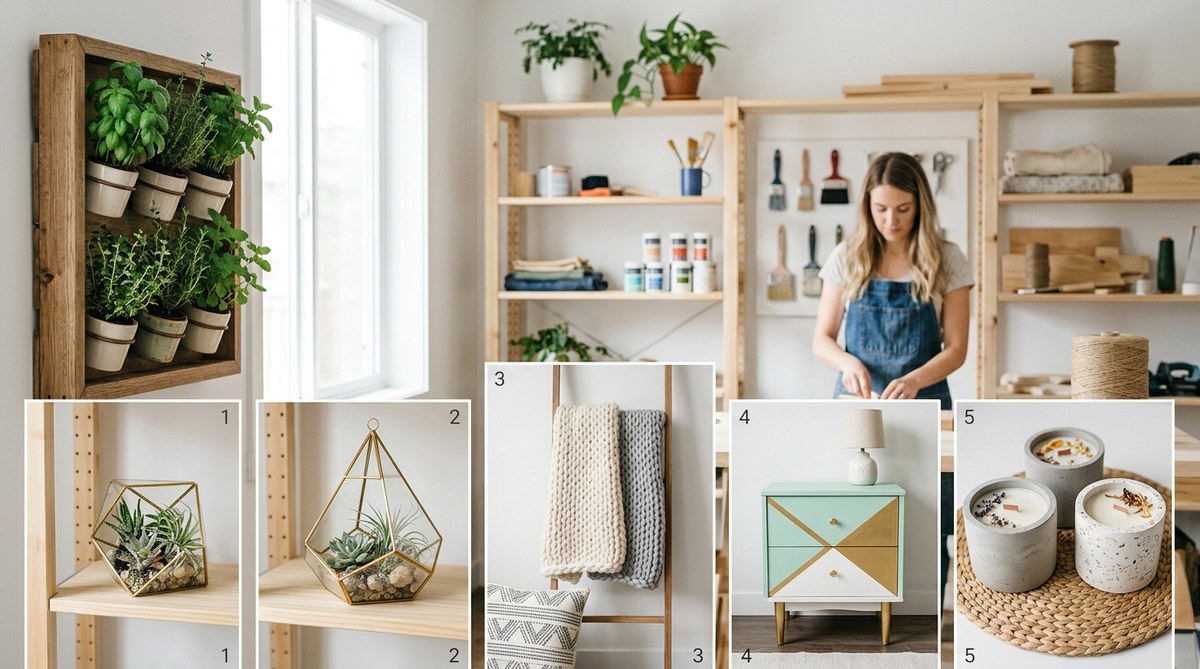
A new year brings fresh creative energy. If you are looking to transform your living space or just want a satisfying weekend activity, 2026 has some cool trends to offer. These projects blend modern aesthetics with hands-on craftsmanship. You do not need a huge workshop or a big budget. Just grab your supplies and get ready to make something amazing. The focus this year is on sustainability, bold textures, and pieces that show off your personality. Let us jump into five trendy DIY projects that will keep you busy and inspired.
Trendy DIY projects in 2026 focus on sustainability, bold textures, and personalized home accents. This guide covers five popular ideas: preserved moss art, terrazzo coasters, macrame wall hangings, upcycled planters, and polymer clay dishes. Each project includes a materials list, step by step instructions, and expert advice to help you avoid common mistakes. Perfect for hobbyists who want modern, Instagram-worthy results without expensive tools. Let us get creative and start building something beautiful today!
Preserved Moss Wall Art for Instant Green Vibes
Bringing nature indoors is a defining home trend for 2026. Living walls are beautiful, but they require maintenance. Preserved moss art gives you the same lush look without the watering schedule. You can create a stunning textured panel in a single afternoon.
Materials you will need:
– Wooden frame (8×10 inches or larger)
– Plywood or foam board backing
– Preserved reindeer moss (various colors)
– Flat sheet moss
– Hot glue gun and low-temp glue sticks
– Artificial ferns or dried flowers for accents
Step by step process:
- Cut the plywood or foam board to fit snugly inside your frame. Attach it using a staple gun or strong craft glue.
- Arrange your preserved moss pieces on the board. Start with a base layer of flat sheet moss to cover the entire surface.
- Layer reindeer moss on top to create depth. Apply hot glue to the backing, not directly onto the moss, to keep the glue hidden.
- Add accent elements like dried fern fronds or clusters of tiny artificial mushrooms.
- Let the glue set for ten minutes. Then place the art in your chosen spot and hang it using a sawtooth hanger.
Common pitfalls and how to avoid them:
| Mistake | Why it happens | Expert fix |
|---|---|---|
| Glue seeps through | Too much glue or high temp | Use low-temp glue and apply sparingly |
| Moss falls off | Heavy pieces not secured | Use floral wire to pin heavy clumps |
| Looks flat | Only one type of moss | Combine sheet, reindeer, and mood moss |
“Preserved moss requires no watering. It stays green for years with just a little dusting,” says interior plant stylist Maria Gonzalez. “It is the perfect entry point for people who want biophilic design without the upkeep.”
This project pairs beautifully with any room. If you want to expand your decor skills, check out our guide on Transform Your Space with Simple DIY Wall Art Ideas for more framing techniques.
Modern Terrazzo Resin Coasters
Terrazzo is back. This classic composite material is showing up on countertops, floors, and accessories. With a simple resin kit, you can create custom coasters that rival expensive store brands. The best part? You get to choose every color.
Materials you will need:
– Clear casting resin and hardener
– Silicone coaster mold
– Resin pigments (choose 2 or 3 colors)
– Terrazzo chips (crushed stone, glass, or colored resin chips)
– Disposable cups, stirring sticks, and a heat gun
How to pour your coasters:
- Measure the resin and hardener using a digital scale. Follow the exact ratio on your kit. Mix slowly to avoid creating bubbles.
- Divide the base resin into separate cups. Add pigment to each cup and stir until the color is even.
- Arrange a layer of terrazzo chips in the bottom of the silicone mold.
- Pour the colored resin over the chips. Tap the mold gently on the table to settle everything.
- Pass a heat gun over the surface to pop any air bubbles that rise.
- Cover the mold with a box to keep dust away. Let it cure for 24 to 48 hours.
- Demold the coasters and sand the edges lightly if needed.
Design ideas for your coasters:
– Muted desert tones (terracotta, sand, sage)
– Bold pop art colors (neon pink, electric blue, yellow)
– Monochrome marble look (white base with black and grey chips)
– Metallic accents (use gold or copper pigment)
Resin work requires patience. For a full list of safety gear and tools, visit our article on Top 10 Essential Tools for Successful DIY Home Projects. It covers everything from respirators to mixing cups.
Beginner Macrame Wall Hanging with Dyed Cotton
Grandmacore is a major aesthetic for 2026. It celebrates traditional crafts like crochet, knitting, and macrame. A woven wall hanging adds warmth to any room. You only need to learn two knots to get started.
Materials you will need:
– 3mm or 5mm cotton macrame cord
– A wooden dowel (12 inches wide)
– Scissors and a tape measure
– Fabric dye (optional, if you want color)
Knotting process for a simple wall hanging:
- Cut 8 cords to 10 feet each. Fold each cord in half and attach it to the dowel using a lark’s head knot.
- Start the first row of square knots. Take four cords, cross the left cord over the middle two, and loop the right cord through.
- Tie a second row of square knots offset from the first. This creates a net pattern.
- Add a row of double half hitch knots across the bottom for a clean horizontal line.
- Trim the bottom fringe straight across or at an angle for a styled finish.
Types of cord to consider:
- Single twist cotton: soft and untwists easily, great for fringe.
- Braided cotton: holds knots tightly, good for beginners.
- Recycled cord: made from reclaimed fibers, perfect for sustainable projects.
- Jute or hemp: stiff and rustic, ideal for plant hangers.
“Macrame is just knots. Once you learn the square knot and the lark’s head knot, you can make almost any pattern,” says fiber artist Jenna Oaks. “Practice on a small piece before you start your main project.”
If you love fiber art, you will enjoy making your own gifts. Learn how to pair a macrame hanging with a handmade planter from our guide on How to Make Your Own Personalized Candle Holders for a complete set.
Upcycled Succulent Planters from Candle Jars
Sustainability is not just a buzzword in 2026. It is a way of life for many DIYers. Instead of tossing empty candle jars, you can turn them into charming homes for succulents. This project costs almost nothing and makes a great gift.
Materials you will need:
– Cleaned empty candle jar (remove all wax and labels)
– Hammer and a thick nail
– Towel (to wrap the jar)
– Small pebbles or gravel
– Succulent soil mix
– Succulent cuttings or small plants
How to prepare your jar:
- Wrap the jar in a towel to catch glass shards. Wear safety glasses.
- Use the hammer and nail to gently tap 3 or 4 drainage holes in the bottom of the jar.
- Rinse the jar to remove glass dust. Let it dry completely.
- Add a half inch layer of pebbles at the bottom for drainage.
- Fill the jar with succulent soil. Plant your cuttings and press the soil gently.
Benefits of upcycling your decor:
– Reduces household waste going to landfills
– Saves money on store bought pots
– Creates a unique, mismatched collection
– Supports a slower, more mindful lifestyle
Planter comparison chart:
| Project Type | Cost | Difficulty | Time Needed |
|---|---|---|---|
| Candle jar planter | Free | Easy | 30 minutes |
| Painted terracotta pot | Low | Easy | 1 hour |
| Wooden crate planter | Medium | Medium | 2 hours |
| Concrete cast planter | Medium | Hard | 24 hours |
“Always wear safety glasses when hammering glass,” warns DIY safety expert Tom Reynolds. “Wrap the jar in a towel to catch any splinters. It keeps the project safe and fun.”
If you are tight on space for your new plants, read our tips on Easy DIY Storage Solutions for Small Spaces to build a vertical shelf for your growing collection.
Polymer Clay Marbling Jewelry Dishes
Personalized accessories are a huge gifting trend for 2026. Polymer clay is forgiving, colorful, and bakes in a regular oven. Marbling creates a high end look with very little effort. These dishes are perfect for holding rings, earrings, or loose change.
Materials you will need:
– White polymer clay (Sculpey or Fimo)
– Colored polymer clay (choose 2 or 3 shades)
– Acrylic rolling pin or smooth bottle
– Craft knife
– Small glass bowl (for shaping)
– Toaster oven (dedicated for crafts)
– Liquid glaze or varnish
Marbling technique step by step:
- Condition the white clay by rolling it into a ball and flattening it repeatedly until it is soft and pliable.
- Roll the colored clay into thin snakes about the thickness of a pencil.
- Place the colored snakes on top of the white sheet. Twist the whole bundle together gently.
- Roll the twisted log back and forth until the colors blend into a marble pattern. Do not overmix.
- Cut the log into slices about a quarter inch thick.
- Drape each slice over an upside down glass bowl to create a curved dish shape.
- Bake according to the clay package instructions (usually 275 degrees for 15 minutes per quarter inch).
- Let the pieces cool completely. Apply a thin layer of liquid glaze for a shiny finish.
Gift ideas for your finished dishes:
– Ring dishes for nightstands
– Earring trays for dressers
– Business card holders for desks
– Tiny bud vases for flowers
Working with clay can get messy. If you are looking to organize your supplies, check out our guide on How to Organize Your Closet for Maximum Space and Accessibility to create a dedicated craft zone in your home.
Start Your 2026 Creative Journey Today
You do not need to be a professional to enjoy these trendy DIY projects. Pick the one that sparks your interest, set aside a weekend, and take it step by step. The satisfaction of making something with your own hands is unmatched. Each project on this list builds skills you can use for future crafts. Whether you choose to preserve moss, pour resin, tie knots, upcycle glass, or mold clay, you are joining a community of makers who value creativity and craftsmanship. Share your creations online and inspire others to join the crafty movement of 2026. Happy making.