
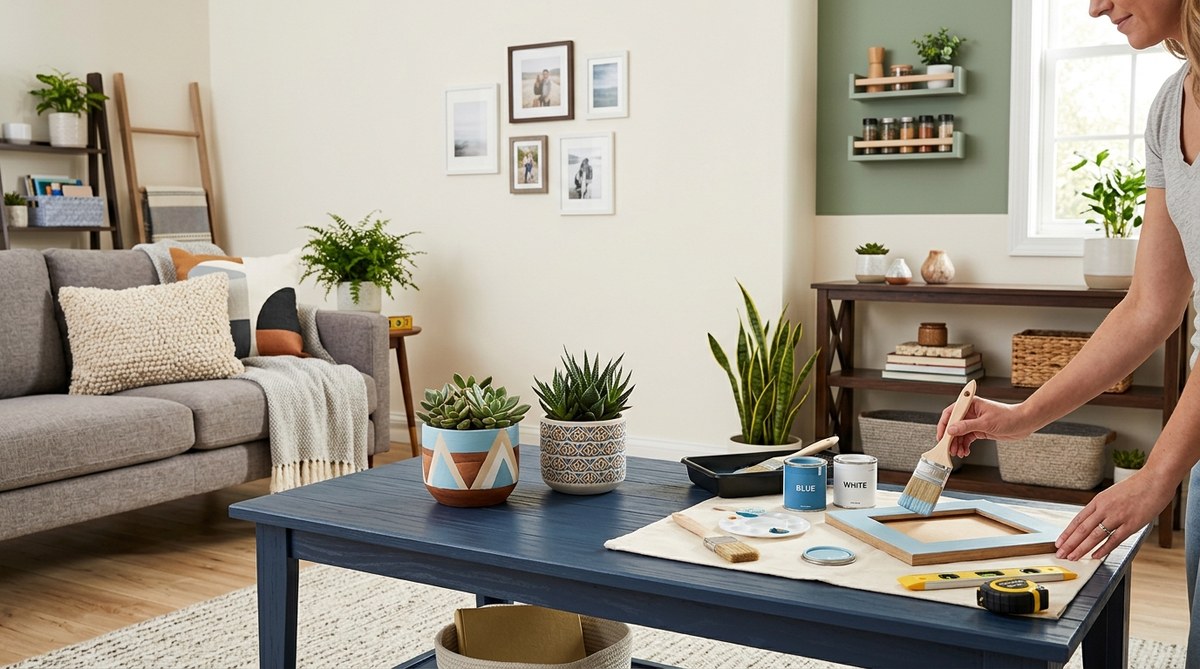
You want to refresh your home this season but your wallet says otherwise. That feels familiar, right? The good news is you don’t need a contractor or a big checkbook to make a real difference. With a few tools, some weekend time, and a little creativity, you can give any room a fresh look. These DIY upgrades are designed for homeowners and renters alike. They respect your budget, your schedule, and your desire for a space that feels like yours. Let’s walk through five practical projects that will change how you feel about your home.
Budget-friendly DIY upgrades don’t have to look cheap. With under $100 and a few hours, you can paint an accent wall, swap hardware, change a light fixture, add a backsplash, or create a gallery wall. These five projects boost style and value without breaking the bank. Pick one that excites you, gather basic tools, and start this weekend.
Why Small Upgrades Make a Big Impact
Before we jump into the projects, let’s talk about why budget-friendly DIY home upgrades matter. A small change can shift the whole mood of a room. A new coat of paint makes walls feel crisp. Updated hardware makes cabinets look custom. Even swapping a light fixture changes how you use the space. The key is focusing on items you see and touch every day. Those high-touch spots are where your effort pays off most.
Another reason these upgrades work: they are low risk. If you mess up (and that’s part of learning), the cost is small. You can always repaint or replace a part. Plus, doing it yourself gives you a sense of ownership. You learn a skill and save money at the same time.
5 Budget Friendly DIY Home Upgrades to Try This Season
Here are five projects that rank high for impact versus cost. Each one can be completed in a weekend. I have listed them from easiest to slightly more involved.
1. Paint an Accent Wall
Nothing changes a room faster than color. An accent wall adds depth and draws the eye. It also costs less than painting the whole room.
What you need:
- A gallon of paint (satin or eggshell finish)
- Painter’s tape
- Drop cloth
- Roller and brush set
Steps:
- Choose the wall you want to stand out. Usually the wall behind a bed, sofa, or dining table works best.
- Clean the wall with a damp cloth and let it dry.
- Tape off edges where the wall meets the ceiling, floor, and corners.
- Apply a primer if you are going from a dark color to a light one.
- Roll the paint on in a “W” pattern and fill in with a brush along edges.
- Let the first coat dry for two hours, then apply a second.
Cost: $30 to $50 for paint and supplies.
This single project can make your room feel larger and more intentional. For more ideas on using paint creatively, check out our guide on
2. Upgrade Cabinet Hardware
Old knobs and pulls date a kitchen or bathroom faster than almost anything else. Replacing them is one of the cheapest upgrades you can make.
What you need:
- New cabinet pulls or knobs (measure your existing screw spacing)
- Screwdriver (usually Phillips head)
- A ruler
Steps:
- Remove one knob at a time so you don’t mix up parts.
- Place the new hardware and align it with the existing holes.
- If the holes don’t match, use a file to widen them slightly or drill new holes. For renters, stick with the same spacing.
- Tighten screws from the back with your screwdriver.
- Repeat for each door or drawer.
Cost: $20 to $60 depending on how many cabinets you have.
Brushed brass, matte black, or polished nickel can completely modernize your kitchen without a remodel. Pair this with a new faucet for a coordinated look. For more tool advice, see our
3. Swap Out a Light Fixture
Light fixtures are like jewelry for your home. A dated boob light or a dusty ceiling fan can drag the room down. Replacing a fixture is easier than you might think.
What you need:
- New fixture (under $50)
- Wire strippers
- Voltage tester
- Screwdriver
- Wire nuts (often come with the fixture)
Steps:
- Turn off the power at the circuit breaker.
- Use the voltage tester to confirm no power to the wires.
- Remove the old fixture by unscrewing the mounting bracket and disconnecting wires.
- Connect the new fixture: match black to black, white to white, and ground to ground (bare copper or green).
- Secure the mounting bracket, attach the canopy, and install bulbs.
- Turn the power back on and test.
Cost: $30 to $80 including fixture and wiring supplies.
If wiring makes you nervous, start with a plug-in pendant light that requires no electrical work. You can hang it over a table or in a reading corner. For another lighting idea, read our
4. Add a Peel-and-Stick Backsplash
Tile backsplash transforms a kitchen or bathroom, but real tile is messy and expensive. Peel-and-stick options have improved dramatically. They look like subway tile, marble, or even herringbone.
What you need:
- Peel-and-stick tiles (buy one extra box for mistakes)
- Utility knife
- Ruler or straight edge
- Scissors for tight spots
Steps:
- Clean the wall thoroughly with a degreaser. Dust and grease will prevent adhesion.
- Measure the area and plan your layout. Start from the center or a visible corner.
- Peel the backing and press the tile onto the wall. Use a ruler to push out air bubbles.
- Cut tiles with the utility knife for edges and outlets.
- Continue until the backsplash is complete. Trim around outlets carefully.
Cost: $40 to $100 for a standard kitchen backsplash.
This project instantly modernizes your cooking space. If you are also dealing with storage issues, our https://how-do-it.info/easy-diy-storage-solutions-for-small-spaces/ can help complement the new look.
5. Create a Gallery Wall
Empty walls are a missed opportunity. A gallery wall adds personality and tells a story. You don’t need expensive art. Use photos, postcards, prints, or even fabric.
What you need:
- Frames (mix sizes and colors for a collected look)
- Print or photos
- Hammer and nails or picture hanging strips
- Measuring tape
Steps:
- Choose a theme or color palette to keep the display cohesive.
- Lay out the frames on the floor to arrange your composition.
- Measure the wall and mark where the center frame goes.
- Start hanging from the center outward.
- Adjust spacing as you go. A gap of 2 to 3 inches between frames works well.
Cost: $25 to $75 if you use frames from thrift stores or reuse old ones.
A gallery wall makes a hallway or living room feel curated. For a more detailed guide, see our
Comparison Table: Projects at a Glance
| Project | Estimated Cost | Time Needed | Skill Level |
|---|---|---|---|
| Paint an accent wall | $30 – $50 | 3 – 4 hours | Beginner |
| Upgrade cabinet hardware | $20 – $60 | 1 – 2 hours | Beginner |
| Swap light fixture | $30 – $80 | 1 – 2 hours | Intermediate |
| Peel-and-stick backsplash | $40 – $100 | 2 – 4 hours | Beginner |
| Create a gallery wall | $25 – $75 | 2 – 3 hours | Beginner |
Tools You Should Have on Hand
A small investment in basic tools will pay for itself after your first project. Here is a bullet list of must haves:
- Hammer
- Screwdriver set (Phillips and flathead)
- Measuring tape
- Level (a small one is fine)
- Utility knife
- Painter’s tape
- Sanding sponge
- Stud finder (for heavier items)
Expert advice: “Before you start any project, lay out all your materials. Take your time measuring twice. The biggest mistake people make is rushing the prep work. Clean surfaces, tape edges properly, and read the instructions twice. That alone cuts your error rate in half.” — Maria Torres, DIY blogger and contractor.
Common Mistakes and How to Avoid Them
Even with easy projects, things can go wrong. Here are three missteps and how to prevent them.
- Skipping prep. Paint won’t stick to dirty walls. Tiles won’t bond to greasy backsplashes. Always clean first.
- Buying low quality materials. A $10 light fixture might look fine, but cheap plastic parts break. Spend a little more on hardware that feels solid.
- Forgetting to measure. Cabinet hardware comes in different spacing. Measure the distance between screw centers before you shop.
How to Choose the Right Project for Your Home
Not every project fits every space. Think about the room you want to improve first. If your kitchen feels outdated, start with hardware or backsplash. If your living room feels dull, paint an accent wall or hang a gallery display. If you are renting, stick with renter friendly options like peel and stick tiles or hardware swaps. Always ask your landlord before painting or changing fixtures.
You can also combine projects for a bigger impact. For example, paint an accent wall in your bedroom and then install new drawer pulls on your dresser. That small combo can rejuvenate the entire room.
Turning One Upgrade Into a Whole Home Refresh
Once you finish one project, you might feel motivated to tackle another. That is the beauty of DIY. You build confidence with each success. Start with the easiest item on the list. After you see the transformation, move to something slightly harder. Before long, your whole home can reflect your style without a huge cost.
For those who want to keep going, consider building a custom bookshelf or organizing your closet. Those projects add function and value. You can find guidance in our https://how-do-it.info/how-to-build-a-custom-bookshelf-without-professional-help/ and
Your Turn to Get Started
The hardest part of any DIY project is the first step. Choose one from the list above. Set aside a few hours on Saturday. Gather your supplies and dive in. You will be amazed at how much a small effort can change the way your home feels. And remember, perfection is not the goal. Progress and enjoyment matter more. So pick a project, turn on some music, and start making your home yours.
Happy upgrading.