
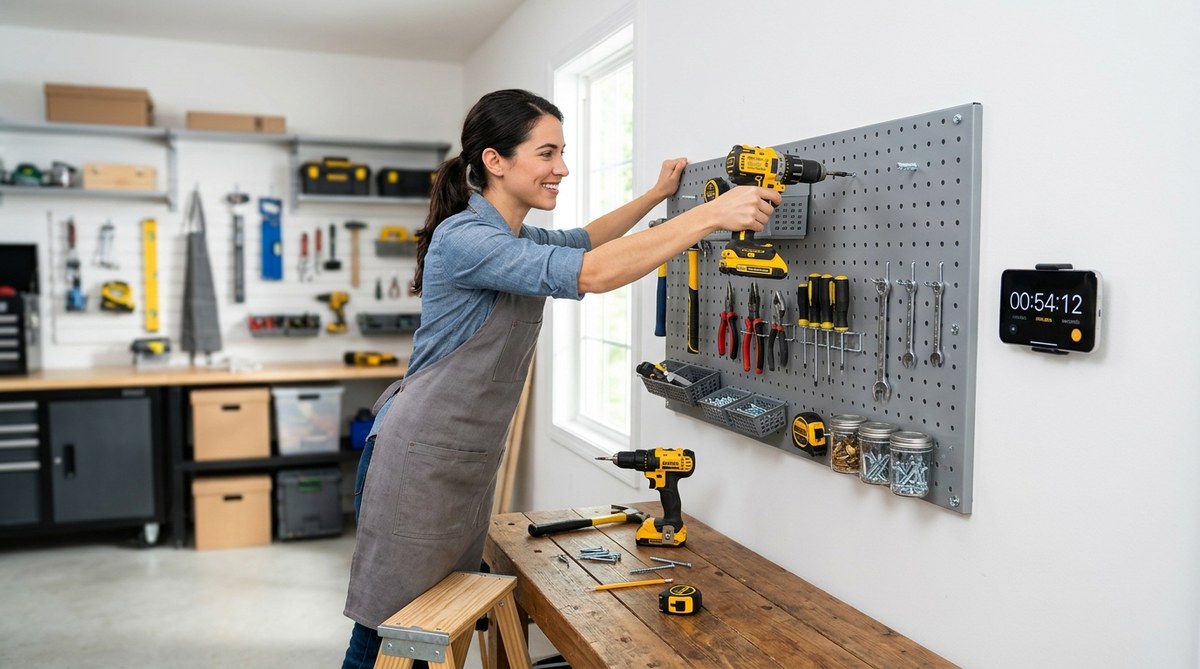
You have a cluttered garage or a craft room that feels chaotic. You want organization but think you lack the time. The good news: installing a pegboard wall organizer can be done in one hour. Yes, really. With the right tools and a simple plan, you can transform a blank wall into a tool storage powerhouse or a craft supply display before your coffee gets cold. Let’s walk through the process, step by step.
Installing a pegboard wall organizer in one hour is absolutely possible. By choosing a pre drilled pegboard, using furring strips for airflow, and anchoring into studs or using heavy duty drywall anchors, you can finish the project in under 60 minutes. This guide covers tools, prep, installation, and common mistakes so you can enjoy a tidy workspace tonight.
Why One Hour Is All You Need
Many homeowners assume hanging a pegboard requires a full day of measuring, cutting, and leveling. The reality is simpler. A standard 4×2 foot pegboard, when installed on a plain wall with modern mounting kits, can be secured in under an hour. The trick lies in preparation. Gather everything before you start, and the installation becomes a sequence of straightforward actions.
This project works best for walls made of drywall or wood. If your wall is concrete or brick, add 10 minutes for a masonry bit and anchors. Even then, an hour and ten minutes is still within reach. For busy DIYers, this is a weekend win that delivers immediate satisfaction.
Tools and Materials You’ll Need
Before you pick up a drill, lay out the following items. Having them within arm’s reach eliminates frantic trips to the hardware store.
- Pre drilled pegboard (standard 1/8 inch or 1/4 inch thickness)
- Furring strips (1×2 lumber, cut to the pegboard height)
- Wood screws (1 1/4 inch for attaching furring strips)
- Drywall anchors (toggle bolts or heavy duty plastic anchors)
- Power drill and appropriate drill bits
- Level (at least 2 feet long)
- Tape measure
- Pencil
- Stud finder
- Screwdriver or impact driver
Optional but helpful: a miter saw for cutting furring strips, a utility knife, and a scrap of cardboard to protect the floor.
If you are new to DIY tools, you might want to read our guide on top 10 essential tools for successful DIY home projects. It covers items that make tasks like this much easier.
Step by Step Process to Install Pegboard in One Hour
Follow these numbered steps. They are ordered to minimize wasted movement and maximize speed.
-
Locate and mark the studs. Use a stud finder to identify the vertical framing behind your drywall. Mark each stud with a pencil at the height where your pegboard will sit. This usually takes three minutes for a 4 foot wide board.
-
Cut and attach furring strips. Cut two furring strips to match the height of your pegboard. Place one strip along the left edge and one along the right edge of where the board will go. These strips create an air gap behind the pegboard, preventing moisture buildup and allowing hooks to fit. Screw them into the studs using 1 1/4 inch wood screws. Drive screws every 16 inches. This step takes about 10 minutes.
-
Position the pegboard. Lift the pegboard onto the furring strips. Align the edges with the strips. Use a level to ensure the board is straight. Have a helper hold it steady, or use a couple of temporary screws to pin it.
-
Drill pilot holes through the pegboard into the strips. A pre drilled pegboard already has holes. Choose holes that line up with the furring strips. Drill through those holes into the wood strips. This ensures the screws go in straight and the board stays flat.
-
Secure the pegboard with screws. Use 1 inch wood screws to fasten the pegboard to the furring strips. Drive screws at the top, middle, and bottom of each strip. Do not overtighten. You want the board flush but not cracked. This takes about 15 minutes.
-
Attach hooks and accessories. Once the board is mounted, insert your pegboard hooks, bins, and shelves. Organize tools or craft supplies as you like. This final step lets you see the payoff immediately.
Total time for steps 1 through 6: approximately 45 to 50 minutes. That leaves you a buffer to admire your work.
If you are looking to expand your organizational game, check out easy DIY storage solutions for small spaces. A pegboard fits perfectly into those strategies.
Common Mistakes to Avoid (and How to Fix Them)
Even with a one hour plan, small errors can eat up time. The table below shows frequent pitfalls and the simple corrections.
| Mistake | Why It Happens | How to Avoid or Fix |
|---|---|---|
| Skipping furring strips | Assumption that direct mounting saves time | Use strips for stability and airflow. Adds only 5 minutes. |
| Using incorrect anchors for drywall | Not locating studs | Use toggle bolts for heavy loads; plastic anchors for light loads. |
| Board not level | Relying on eye instead of a level | Always use a 2 foot level. Adjust screws slightly if needed. |
| Overtightening screws | Enthusiasm | Stop when screw head is flush with board. Back out a turn if you see cracking. |
| Choosing the wrong pegboard thickness | 1/8 inch feels flimsy | 1/4 inch is sturdier for tools. 1/8 inch works for craft supplies. |
A pro tip: place a scrap of wood behind the board when drilling to prevent the bit from hitting the wall too hard.
Expert Advice for a Smooth Installation
I spoke with a contractor who has installed dozens of pegboards for busy families. He shared a simple rule.
“Never trust the first hole you drill. Mark your spots with a level, drill a pilot hole, then check alignment again before driving the screw. It takes an extra 30 seconds per screw and saves you from crooked boards that need redoing.”
Another piece of wisdom: preload your drill with a screw bit and keep a magnetic tray on your belt. This reduces bending down to pick up dropped screws. Small changes in your workflow can shave off 10 minutes.
For those who love DIY projects, we have a collection of 5 trendy DIY projects to try in 2026. A pegboard wall fits right in with modern home organization trends.
What to Do With Your New Pegboard Wall
Once the board is up, the real fun begins. Arrange tools by frequency of use. Hang hammers, screwdrivers, and wrenches at eye level. Store seldom used items on higher hooks. For crafters, sort scissors, ribbons, and paintbrushes in clear bins attached to the board.
Consider using colored pegs or labels to create zones. For example, mark a zone for woodworking tools with red pegs and a zone for sewing with blue pegs. This system makes cleanup faster because everything has a designated spot.
Do not forget to leave a small section empty. That space is for future projects or items you acquire later. A pegboard is a living system that grows with your needs.
If you are into upcycling, see how to upcycle old furniture into stunning statement pieces. A pegboard can be attached to an old dresser to create a craft station.
Your install is done. You beat the clock. Now you have a workspace that makes you smile every time you walk past it. Grab a drink, stand back, and appreciate the order you created in just sixty minutes.