
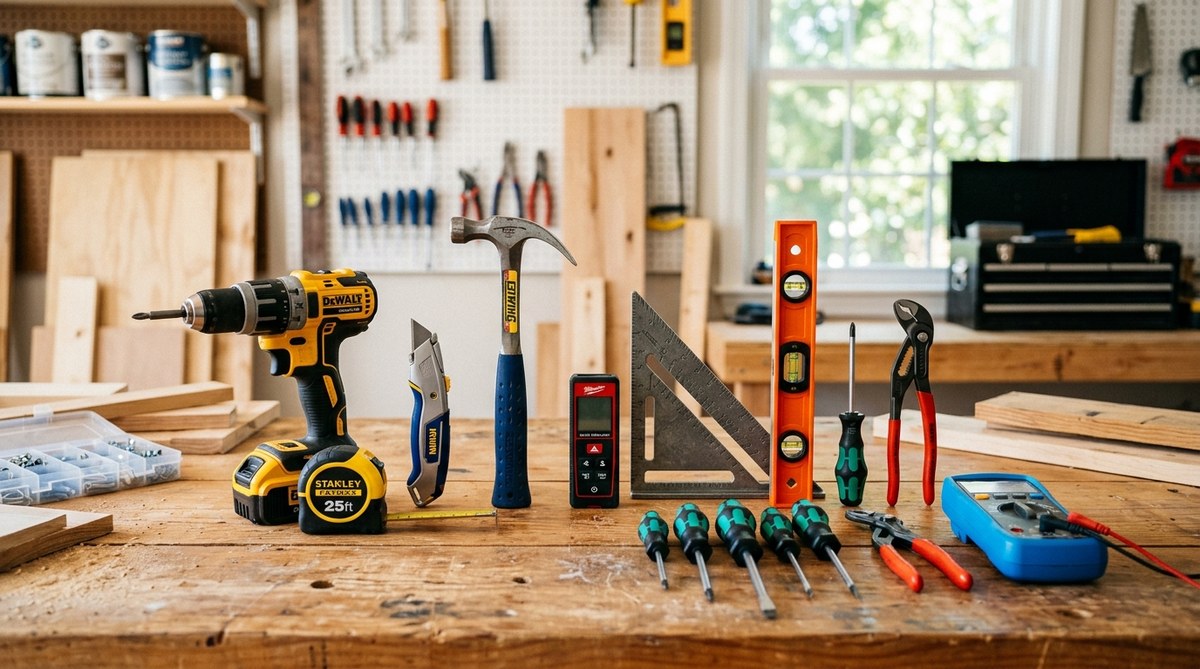
Getting started on DIY home projects can feel overwhelming, especially if you’re unsure which tools are must-haves. Having the right equipment not only makes the work easier but also helps ensure your projects turn out well. Whether you’re hanging pictures, fixing a leaky faucet, or building furniture, equipping yourself with the essentials is key. Let’s walk through the top 10 tools every DIY homeowner should have in their arsenal.
Having the right set of basic tools makes DIY projects smoother and more enjoyable. Focus on quality, versatility, and safety to build a reliable toolkit that will serve you for years to come. Start with these essentials and expand as your skills grow.
The core tools every DIYer needs
Building a solid toolkit begins with understanding which tools are versatile enough to handle most home projects. These essentials help you save time, reduce frustration, and improve the quality of your work. Below, you’ll find a list of the top 10 tools that are worth investing in for any DIY enthusiast.
1. Claw hammer
A good hammer is the foundation of any toolkit. It’s perfect for driving nails, removing nails, and light demolition. Choose one with a comfortable grip and a balanced weight. A claw hammer is versatile enough for framing, hanging art, or assembling furniture. Look for one with a sturdy head and a handle that feels secure in your hand.
2. Tape measure
Accurate measurements are crucial for successful projects. A reliable, retractable tape measure with at least 25 feet of reach will cover most needs. It helps you measure spaces, cut materials precisely, and align fixtures properly. Always opt for a tape with clear markings and a lock feature for ease of use.
3. Level
Ensuring your work is straight and aligned saves you from headaches later. A bubble or spirit level is simple but invaluable, especially for hanging shelves, pictures, or installing cabinets. For larger projects, a longer level provides better accuracy. A laser level can be a good upgrade if you want even more precision.
4. Cordless drill
A cordless drill speeds up drilling holes and driving screws. It’s a must-have for assembling furniture, installing fixtures, or even minor demolition. Look for a model with variable speed control and a set of drill bits. A lightweight, battery-powered drill makes working in tight spaces easier.
5. Screwdriver set
While a drill can handle most screw-driving tasks, a set of manual screwdrivers is still handy. Different sizes and types (Phillips and flathead) allow you to tackle various fasteners. Keep a magnetic screwdriver for small screws and a Phillips head for most household uses.
6. Handsaw
Every DIY toolkit benefits from a handsaw. It’s perfect for cutting wood, plastic, or drywall with precision. Choose one with a comfortable handle and sharp teeth for cleaner cuts. For larger projects, a small crosscut or rip saw will do the job nicely.
7. Utility knife
A sharp utility knife helps with cutting wallpaper, trimming materials, or opening packages. Keep a few blades handy and replace them when dull. A sturdy, retractable utility knife offers safety and ease of use.
8. Pliers
Pliers are versatile tools for gripping, twisting, or bending wires and materials. A pair of combination pliers and needle-nose pliers cover most tasks. Choose ones with cushioned grips for comfort during longer use.
9. Safety gear
Safety should always come first. Invest in safety glasses, work gloves, and a dust mask. Safety gear protects your eyes from debris, your hands from splinters or sharp objects, and your lungs from dust or fumes.
10. Work gloves
Good work gloves protect your hands from cuts, splinters, and dirt. They also improve grip on tools and materials. Choose a pair that fits well and offers flexibility for delicate tasks or durability for heavy-duty work.
Practical steps to build your DIY toolkit
Starting with these essentials sets a strong foundation. Here’s how to assemble your kit step by step:
- Identify your project needs. Think about the types of projects you plan to do most often.
- Research quality tools. Invest in brands known for durability and reliability.
- Buy in stages. Start with the most used tools and add specialized equipment over time.
- Maintain your tools. Keep them clean, sharpen blades, and store them properly.
Tips for selecting the right tools
- Prioritize comfort and safety features.
- Choose versatile tools that can handle multiple tasks.
- Look for sets that include multiple sizes or types to save money.
- Read reviews to find tools with long-lasting performance.
Common mistakes to avoid with DIY tools
| Mistake | Why it matters | How to avoid it |
|---|---|---|
| Using low-quality tools | They break easily and may cause injury | Invest in reputable brands and quality materials |
| Not maintaining tools | Dull blades or rust reduce effectiveness | Clean, sharpen, and store tools properly |
| Overlooking safety gear | Injuries can ruin your project | Always wear safety glasses, gloves, and masks |
| Choosing the wrong size or type | Leads to frustration or damage | Measure carefully and select the proper tool for the task |
Expert tip: “Start with the basics and gradually expand your toolkit. Focus on quality tools that will last through many projects. Safety should always be your top priority.” — Home improvement specialist
Keep your DIY projects moving forward
Building your collection of essential DIY tools is a rewarding process. As you gain experience, you’ll learn which additional tools make your work easier. Remember to keep safety a priority and invest in quality equipment. With these basics at your side, you’ll be ready for most home repairs and improvements.
If you’re interested in enhancing your skills or tackling specific projects, check out our guide on [transforming your space with simple DIY wall art ideas] for creative inspiration.
Happy DIYing! With the right tools and a little patience, you’ll turn your home improvement dreams into reality.